 Nerdy
Nerdy
Targeted Communications
Repeating the same message to everyone is better than silence, but tailoring the message to each audience is what actually moves people. This exercise helps you plan who hears what, where, and why it matters to them.
Overview
Most change communication fails in one of two ways: leaders say it once and assume the message landed, or they broadcast a single message on repeat without considering what different audiences actually care about. Relentless Communication handles the volume problem. This exercise handles the targeting problem.
The core idea is borrowed from marketing: segment your audience, understand their pains and gains, then craft messages that connect the change to what each group values. An engineering leader rolling out dynamic teaming might emphasize shorter time-to-market for executives, cross-functional learning for senior engineers, and career growth through diverse project exposure for individual contributors. Same change, different “what’s in it for me.”
The Communication Planning Matrix
The exercise produces a simple matrix that maps a change to its audiences, their benefits, and the venues where you’ll reach them.
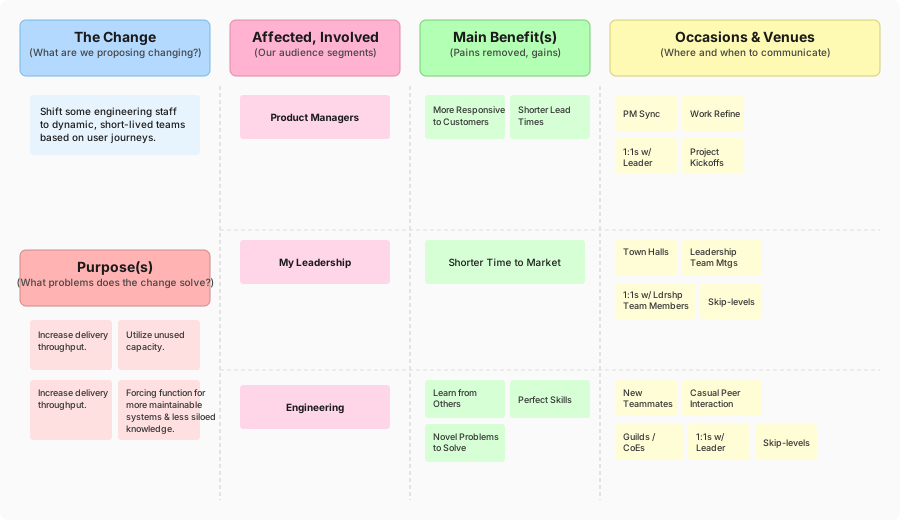
Four columns, one row per audience segment:
| Column | Question it answers |
|---|---|
| The Change | What are we proposing to change? |
| Affected, Involved | Who are our audience segments? |
| Main Benefit(s) | What pains are removed or gains created for this group? |
| Occasions & Venues | Where and when do we reach this group? |
A fifth element sits alongside the change: Purpose. What problems does the change solve? This grounds the whole exercise and keeps your messaging honest.
Step-by-Step Guide
1. Define the change and its purpose
Write the change in plain language. Not a vision statement; a description of what’s actually different. Then list the problems it solves or opportunities it creates. Be specific. “Increase delivery throughput” beats “drive operational excellence.”
2. Identify your audience segments
List every group that’s affected by or involved in the change. Think beyond the obvious. The article’s dynamic teaming example surfaces three distinct segments: product managers, leadership, and engineering. Your change might also touch customers, partner teams, HR, or finance.
3. Map benefits per segment
For each segment, ask: what’s in it for them? This is the hardest step because it requires empathy. An engineer doesn’t care about “shorter time to market” the way an executive does. They care about learning from new teammates, tackling novel problems, and perfecting their skills. Find the version of the truth that resonates with each group.
4. Identify occasions and venues
For each segment, list every touchpoint where you can deliver the message. Think broadly: 1:1s, team meetings, town halls, skip-levels, project kickoffs, guilds, Slack channels, retrospectives, casual hallway conversations. The more venues you identify, the more repetition you can build without it feeling repetitive.
5. Craft targeted messages
Now combine segments, benefits, and venues into specific communication actions. For example:
- “When speaking with my leadership in our 1:1, I will sell this change as shortening our time to market for new apps and services.”
- “I will ask our engineering CoE leader to create a plan to highlight the learning benefits of collaborating with new people.”
Each action connects a specific audience, a specific benefit, and a specific venue.
6. Evolve the message over time
Your messaging should mature as the change unfolds. Early on, lead with principles and rationale. As results emerge, shift to stories. Eventually, embed hard data into those stories.
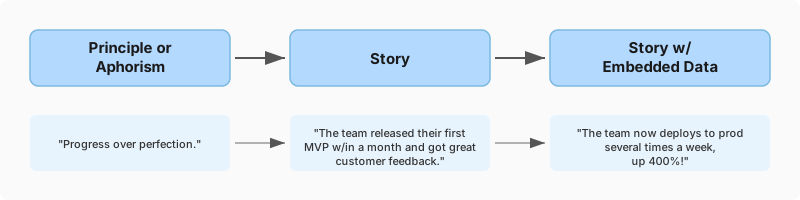
This progression keeps the message fresh while reinforcing the same core change. People who tuned out the principle might engage with the story. People who dismissed the story might pay attention when the data shows up.
Tips
- Don’t skip the “purpose” step. If you can’t articulate why the change matters, neither can anyone else.
- Benefits are audience-specific, not universal. “Better for the company” is not a benefit anyone feels in their daily work.
- Venues matter as much as messages. A skip-level conversation carries different weight than a town hall announcement. Use both.
- Revisit the matrix as the change progresses. New segments may emerge. Benefits may shift as you learn what actually resonates.
Resources
- A Leader’s Guide to Overcommunication — the original newsletter article this exercise is drawn from
- Relentless Communication — the principle behind why targeted repetition works
- Change Vision — the vision that your communications should be reinforcing
- Change Vision Evaluation — test whether your vision is ready to communicate
- John P. Kotter, “Leading Change: Why Transformation Efforts Fail” (Harvard Business Review, 1995)