 Nerdy
Nerdy
Stakeholder Mapping
Change fails when you misread the room. Stakeholder mapping forces you to name who gains, who sacrifices, and who you haven't talked to yet.
Overview
Stakeholder mapping identifies who is affected by a change and what their relationship to it looks like.
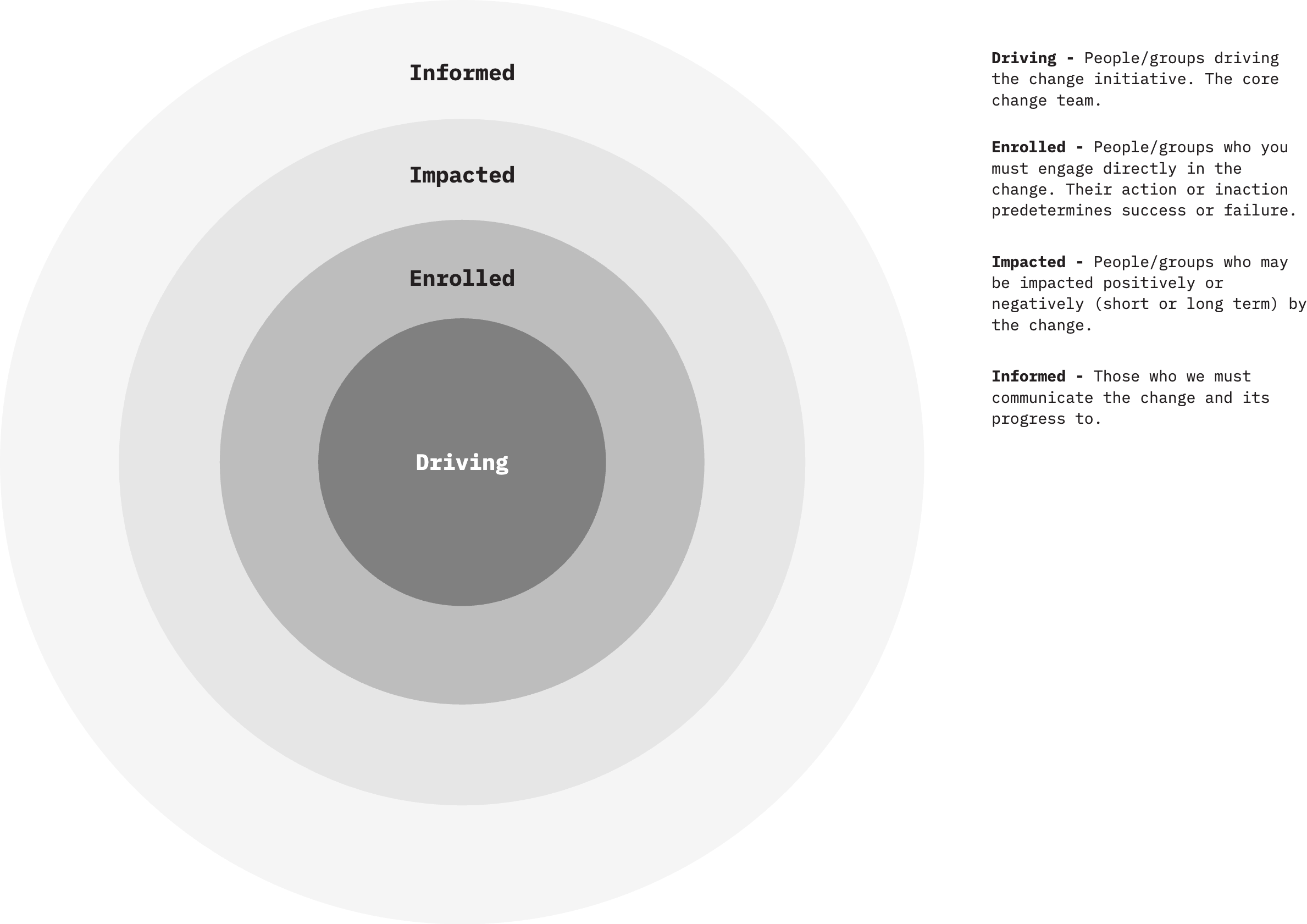
The framework we use sorts people into four categories:
- Driving — actively leading and accountable for the change
- Enrolled — committed and contributing to the change
- Impacted — affected by the change but not yet participating in shaping it
- Informed — need awareness but aren’t directly touched
This isn’t a static label; the whole point is to identify who needs to move between categories and what it would take to make that happen.
Tradeoffs
The second layer is a gains and sacrifices analysis for each group. Every change asks people to give something up: familiar tools, established authority, comfortable routines. If you can’t articulate what a stakeholder group sacrifices, you don’t understand their resistance. And if you can’t articulate what they gain, you have no enrollment pitch.
Next Steps
This analysis feeds directly into the guiding coalition work and shapes the communication strategy; different groups need different messages because their gains and sacrifices differ.
Resources
- Guiding Coalition — the coalition that emerges from stakeholder mapping
- RAPID Model — formalizes decision roles that map onto stakeholder categories
- Change Vision & Strategy — workshop where this activity is facilitated
- John P. Kotter, Leading Change (Harvard Business Review Press, 1996)