 Nerdy
Reflect
A retrospective looks back. A reflection sends what the team learned into the next plan, so the next iteration changes.
Overview
Reflect closes each hyper-sprint in the Dojo Loop. It is an opinionated take on the agile retrospective, and the name is deliberate: a reflection bounces off something and comes back changed. The team gathers facts, data, feelings, and impressions from the last two and a half days and carries them into planning.
Start with whatever format the coach knows well. “Good, Meh, Bad” is fine. Then vary the format to fit where the team is in its challenge and what it is trying to learn.
Formats That Earn Their Place
Product feedback retro
When shares get popular, the feedback piles up. One platform team’s share audience went from a dozen people to three dozen, plus a VP nobody expected. Sort the notes on a grid like this one:
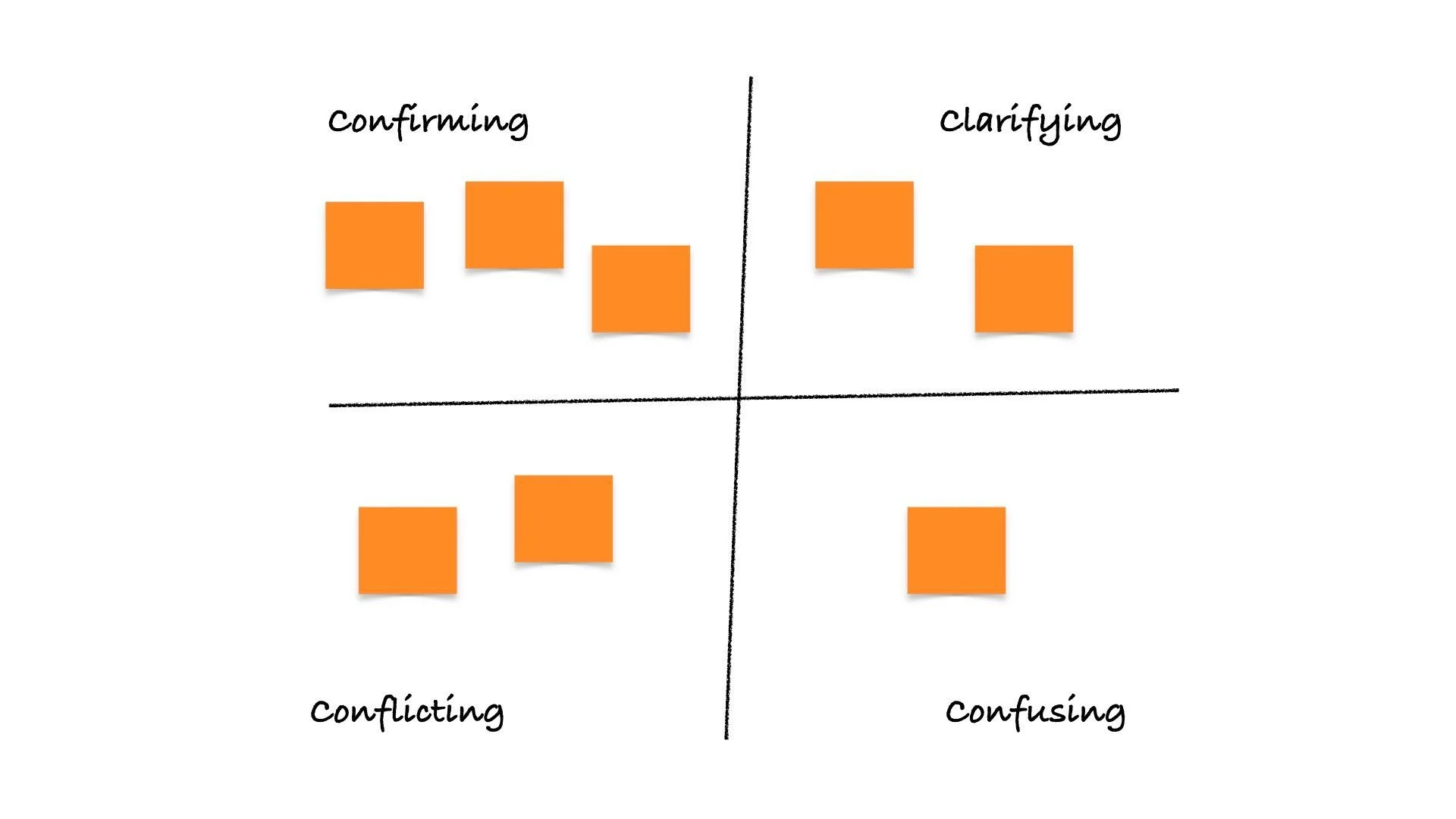
What confirmed our plan? What conflicted with it? What clarified something we were guessing at? What confused us and needs a follow-up?
Team health check
Run a team health check once or twice in a six-week challenge. Rate dimensions like fun, ease of release, codebase health, speed, and learning. Look for hotspots, talk about them, and change something.
Skills and charter check-ins
At the midpoint, revisit the team’s frame. Is each goal still important? Has the team learned something that sharpens it? Which key results are out of reach in the time left, and is there a better one? Update the frame and capture any new work for planning.
Near the end, bring back the skills matrix from the charter. Ask people to circle the skills where they’ve leveled up. It’s the clearest evidence a dojo produces.
Fun, Done, Learn
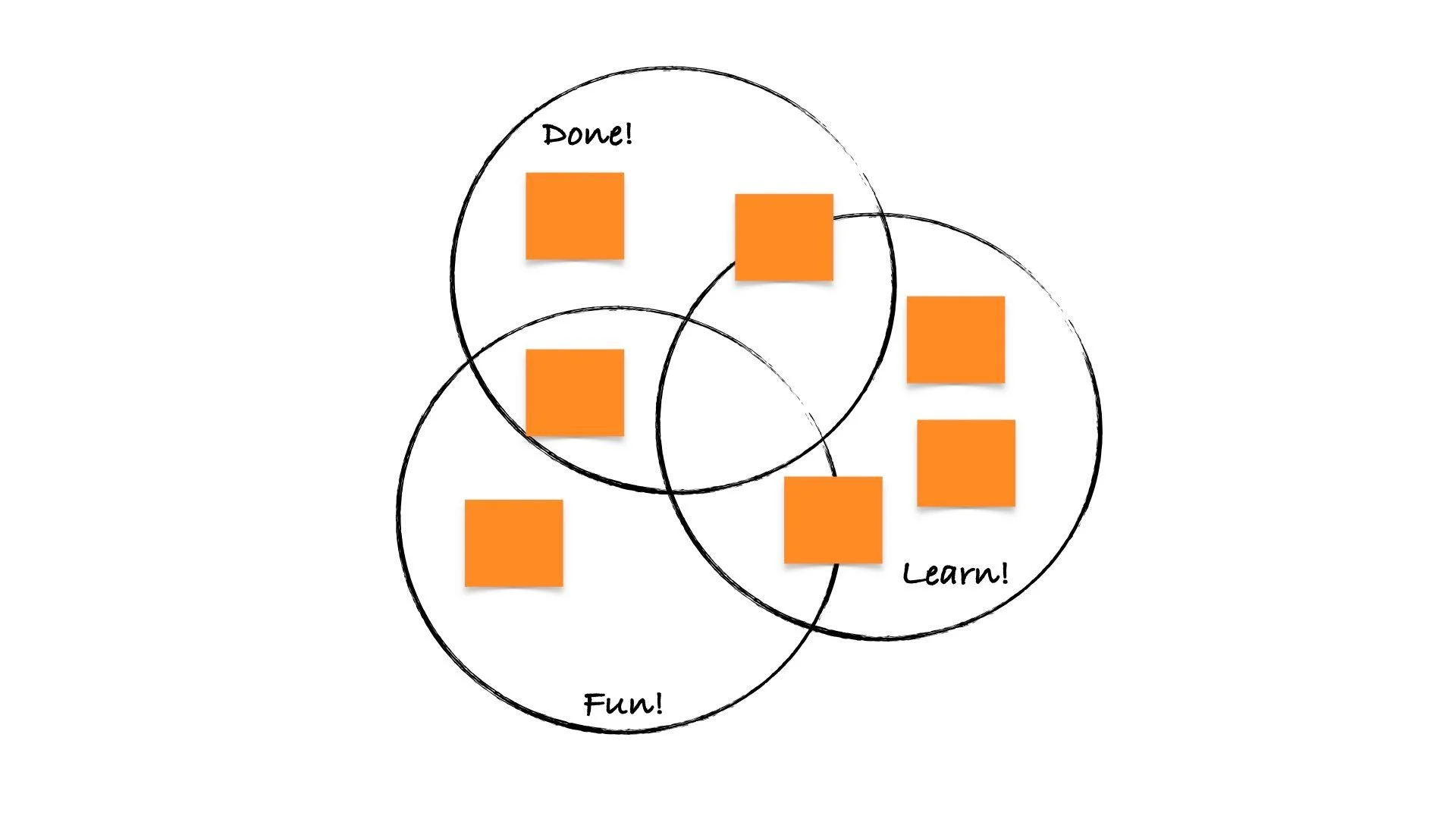
Reflection doesn’t need a calendar slot. After a run of mob rotations, take two minutes for a Fun, Done, Learn micro-retro. What was fun? What got done? What did we learn?
Back Off
New coaches try to carry everything and turn into a facilitation bot. Hand the retro to a team member instead. If the team has a Scrum Master, they’ll likely welcome the chance to run a favorite format. A coach’s job is to become unnecessary, and that starts with the meetings.
Pull the andon cord whenever the team needs to stop and reflect.
Resources
- Dojo Loop — the full cycle
- Retrospectives — the broader practice this beat adapts
- Team Health Check — a structured read on team health
- Skills Matrix — the inventory you revisit at the end of a challenge
- Experiential Learning Cycle — the reflective-observation stage this beat makes routine